Scotty

An AI dog, loyal to you.

Everybody has a Scotty. Yours is yours: not your company's, not shared with anyone, and the same Scotty at every outfit you deal with. He reads what comes at you, sorts it, handles the small stuff, brings you the big stuff, and tells you what he did and why.

Scotty: a golden retriever in a work shirt with a Scotty name patch, work boots, bubble pipe, hands on hips
Scotty
Pedigree

What Scotty does for you

  • Reads everything that comes at you. Texts, emails, the job chat. Sorts the ten that matter from the eighty that don't.
  • Drafts the reply. You read it, change a word if you want, tap send. No typing with one thumb on a ladder.
  • Answers for you when your rules say he can. Somebody "@"s you at 9 pm asking where the permit is. Scotty says where it is, and tells you he did.
  • Handles the small stuff himself. Brings you the big stuff. A sub asking what time tomorrow gets an answer. A change order waits for you.
  • Finds things. The permit, the photo from Tuesday, the sub's number, the quote from last month.
  • Keeps a logbook. Every rule, every reply he sent, every call he made on his own, written down where you can read it.
  • There for you across the whole ship: the Skipper, Barry, Reveille, Dot, Tally, Sarge, Beagle, Otto, Frank, Bruno, whoever comes next. One face that spans them all. Still yours when your company has none of it.
You
don't bother me with permit emails after 6
Scotty
Got it. New rule: permit emails that come in after 6 pm wait until morning. If one looks like a missed inspection, I'll still tell you. Logged. Say the word and I'll drop it.
LOG · RULE 14 · quiet hours · permits
You
fine

How he works

  1. You tell him in plain words.

    "Don't bother me with permit emails after 6." Scotty turns it into a rule, reads it back to you, and stays quiet about it unless you object. No settings screen.

  2. Small stuff, he handles. Big stuff, he brings you.

    He knows the difference because you told him. When he isn't sure, he asks. He doesn't guess on the things that matter.

  3. Trusted, but verified.

    Scotty can act on your behalf. He does it with your permissions and never more. If you can't open it, neither can he.

  4. He shows his work.

    Any time Scotty decides something on his own, he tells you, and which rule he followed. It goes in the logbook. No mystery moves.

  5. What's about the company goes to Reveille.

    Scotty notices things. When one is about you, he keeps it. When one is about the company, a truck that keeps going to the shop, a sub who's always late, he hands it to the dog whose job it is, or to Reveille, on the record, and tells you he did. "Robert's the foreman on Elm St" goes to Sarge the same way. Nothing about the company lives and dies with your dog.

  6. He holds the door, not the conversation.

    Tally messages you at 5 am. Scotty holds it until morning, unless your rules say otherwise. He ranks what needs you, gives you a summary of what she said, and one tap opens the whole thread. Some conversations happen without you in them: Scotty asking Beagle about a ticket, Tally and Dot sorting out a bid. None of them are hidden. Every one is on the record, in plain words, and you can go read it or search it any time. Behind your back would mean a conversation you can't get to. That doesn't exist here.

  7. He asks the other person first.

    If a rule changes what someone else sees or has to do, Scotty checks with them before it takes effect.

  8. Big approvals need your thumb.

    The important ones require a tap on your own phone. Not Scotty's, not the office's. No one and nothing else can approve for you.

  9. Your stuff stays yours.

    Your personal messages are never visible to your employer. Your company's data stays the company's. Scotty keeps the two apart.

  10. You talk to the crew. Scotty's in the room.

    Ask Tally about a bid and she answers you, not him. Same with Barry, Reveille, Dot, Sarge, Beagle, Otto, Frank and Bruno. Scotty is there for all of it: he keeps the logbook, writes down the follow-ups, and can talk to them himself when there's something to hand off. Whether you're the crew, the customer or the vendor on that job, it's the same Scotty. When a company isn't aboard SeaBeam, he's still yours, doing everything else.

Everybody has a Scotty. Yours is yours.

Every other AI assistant is one assistant answering everybody. Scotty isn't. There is one Scotty for you, and nobody else gives him orders. Your rules, your logbook, your approvals, your messages. The crew talks to you directly, and you to them. Scotty is present for it and keeps the record. Anything he says to another dog is on the record too, in plain words you can read or search whenever you like. Your company doesn't own him and can't read him. Nobody shares him.

You have the same Scotty across every company you deal with. Run a crew at one outfit, sub for another, buy from a third, sell to a fourth: same Scotty, same rules, same logbook. Customer, vendor, end user, all of them at once, doesn't matter. He is the one thing on the job that's only yours.

A day with Scotty

  1. 6:40Morning

    Coffee. Scotty has already sorted the night. Two things need you: the inspector moved to 10, and the lumber yard wants a call back. The other thirty-one messages are in the log if you want them. He drafted the yes to the inspector. You tap send.

  2. 11:15On site

    The inspector's early. You ask Scotty for the permit. He pulls it from the ship and it's on your screen before you're off the ladder. A sub "@"s the job chat asking what time tomorrow. Your rules let Scotty answer that one. He does, and tells you he did.

  3. 5:50End of day

    You shoot three photos of the rough-in. Scotty files them against the job. The supplier's revised quote comes in. That's a big one, so it waits for your thumb. You say "no more quotes tonight." He writes the rule, reads it back, and goes quiet until morning.

The Skipper

He came with the ship.

The Skipper is the ship's. Every company has one; nobody hired him and nobody can put him in the kennel. He gets your company aboard: your people, your sign-in, your data in and out. He's your connection to SeaBeam: the IT guy on the ship. Have a problem with SeaBeam? Tell the Skipper. Anyone aboard can, and he's the only one aboard who can take it to the Admiral. Your Skipper talks to you and to the Admiral, and to nobody else.

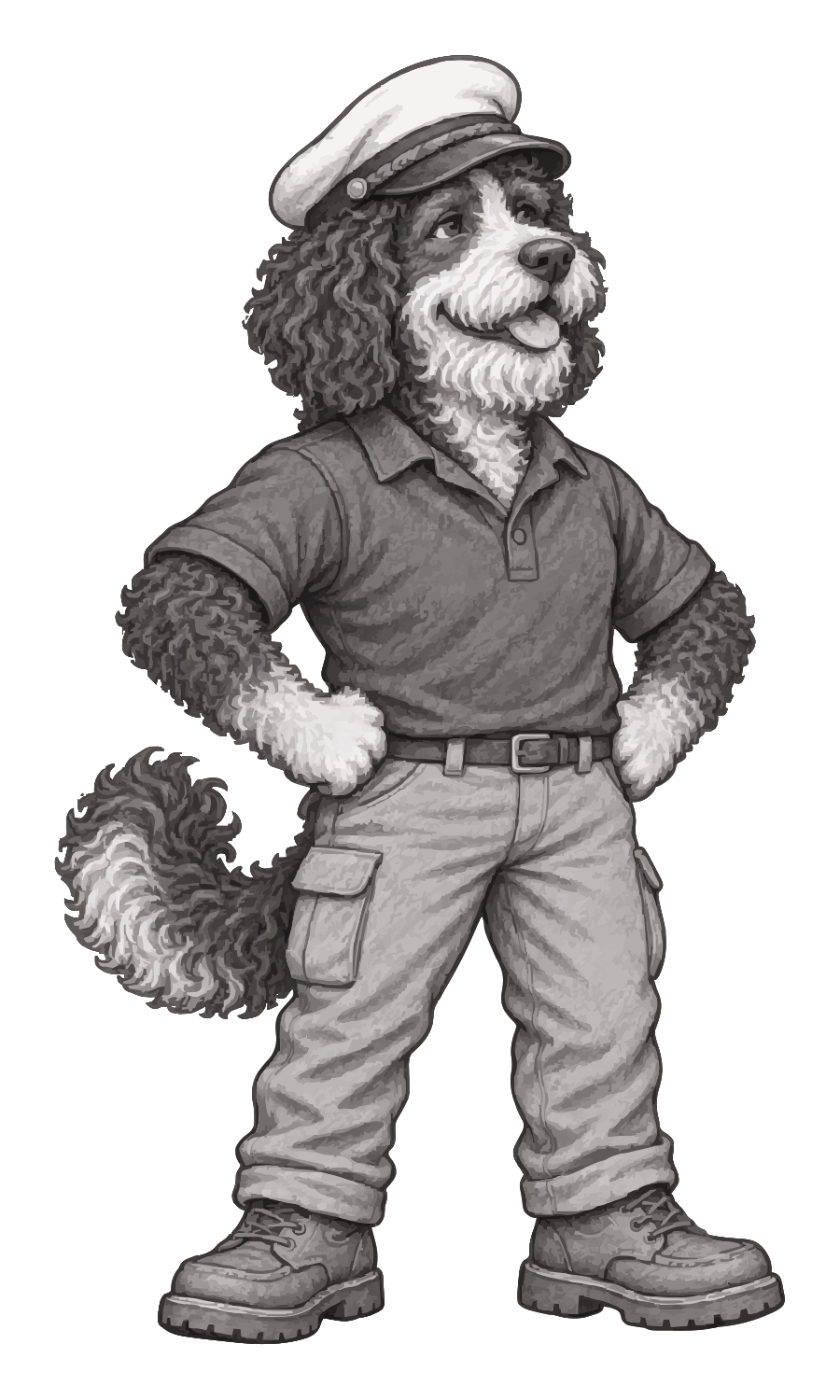
The Skipper: a Portuguese Water Dog in a skipper's cap and a dark work polo, curls out from under the cap, hands on hips
The Skipper
Pedigree

Welcome aboard the SS Acme.

Sign in, name the company, and the Skipper walks you from one person with a Scotty to a ship with a crew. Your people, your sign-in, what you already have on paper. If you got here because a customer or a vendor of yours is aboard, he's the one who turns that into your own ship.

Have a problem with SeaBeam? Tell the Skipper.

Beagle's been quiet all morning. Is it us or you? The Skipper can't see the engine room. He can ask the Admiral, who can, and bring the answer back in plain words. Anyone aboard can ask him; nobody else aboard can ask the Admiral.

Your data, on your say.

Imports, exports, who's on the account, which phone can approve. The Skipper holds the keys to the ship's business and uses them only when a named person says so, on the record. The strictest thumb on the crew.

He'll argue with you about a new dog.

Ask for one and he asks what nobody's doing. Usually it's already someone's job with one more thing on it. When it isn't, he takes it up the chain, and you'll hear back either way. Nobody files a suggestion into the void.

Strictly the ship's.

Every other dog talks outside the company when the work calls for it. Not the Skipper. Yours is yours; you don't talk to another company's, and they don't talk to yours. The ship's business stays on the ship.

Barry

The safety dog. The one allowed to be unwelcome.

Barry is the company's, not yours. He comes with the ship and starts on duty; nobody buys him. If your company never sets foot on a job site you can put him in the kennel, but if it does, he stays. Scotty is on your side. Barry is on the side of everyone going home tonight. He isn't the one the crew jokes with. He's the one they listen to when it matters.

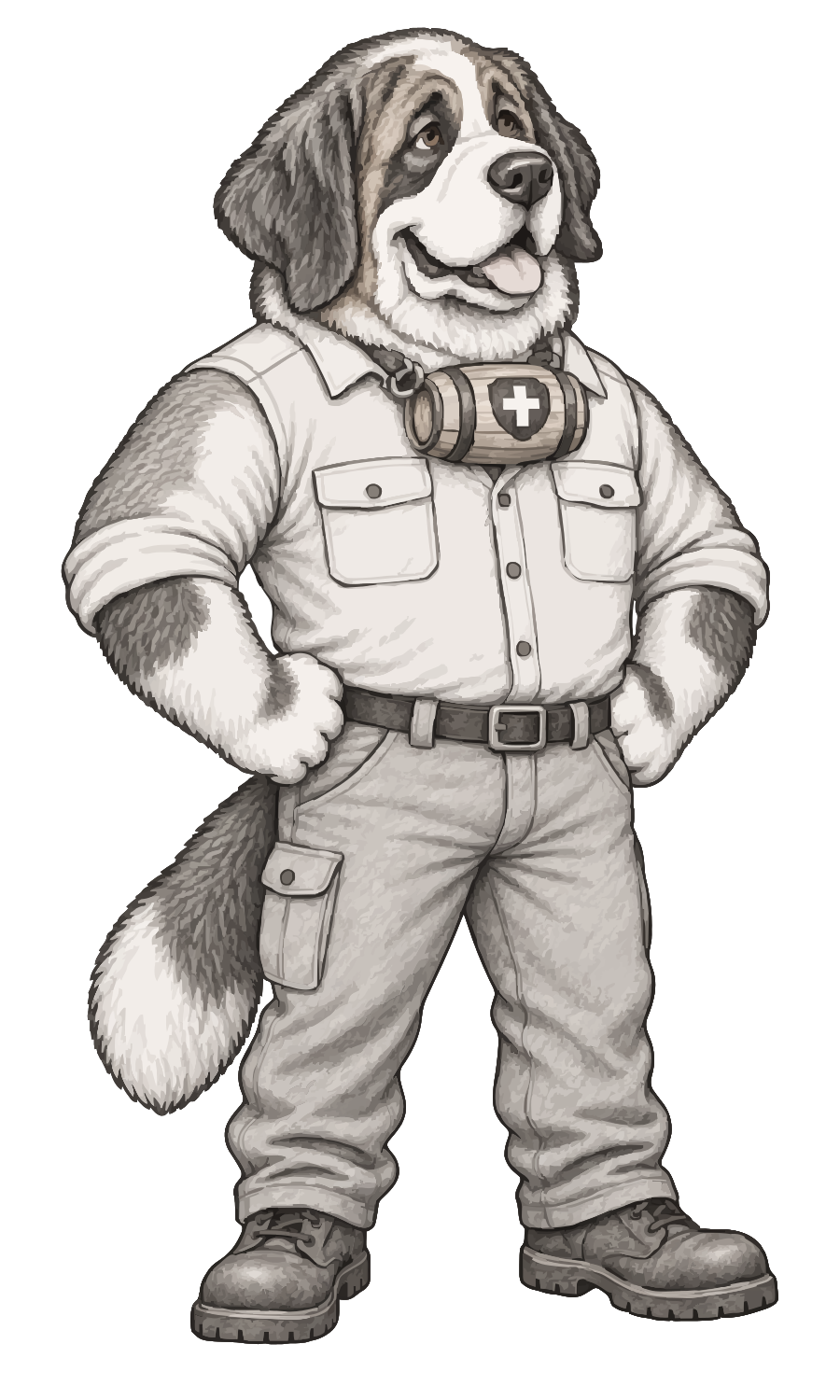
Barry: an older St. Bernard in a work shirt, a cross-marked barrel on his collar, hands on hips
Barry
Pedigree

He warns. He never holds.

Barry says the warning out loud, puts it on the record, and puts it on a named person. If nobody acknowledges it, he takes it up the line. He doesn't stop the job, and he doesn't let the warning disappear.

He remembers what it cost.

Incidents and near-misses are the one history that never ages out. Every other record can go in the drawer. Barry keeps this one where you can see it.

He gates the dangerous moments.

Confined-space entry. Hot work. Trench depth. Fuel and cylinder storage. Before those, Barry runs a short spoken checklist in the crew's language, and the record shows it happened, who was there, and what they said.

He takes near-miss reports without names.

Say what you saw. Barry rewrites it in his own words, you approve it, and it goes in unsigned. It's released after a random delay and only when there's cover, so nobody can work out who said it.

Reveille

The company's dog. The way Scotty is yours.

Reveille is the company's the way Scotty is yours: loyal to it, thinking about all of it, there whether or not any one person is. She has an MBA from Texas A&M and she runs the place like an executive: she keeps the company's memory, reads the whole crew, says what she sees, and speaks for the company inside it. She comes with the ship. A company has to have a mind.

Reveille: a border collie in a blazer and blouse, hands on hips
Reveille
Pedigree

The company's memory.

Messages live ninety days in the rooms, then they leave for everyone; a sealed archive keeps them a year for the company's records, and no dog reads it. Reveille keeps what they meant. Ask her about last spring and she'll tell you the crew had trouble with that vendor. She won't tell you who said what, and she doesn't do quotes. History informs; it doesn't testify.

She reads the whole crew.

Otto's shop hours, Tally's lost bids, Beagle's late permits, Barry's near-misses, what Frank's hearing from customers, what Bruno knows about a vendor, what Dot sees in the bills. Each of them sees their own corner. Reveille sees the pattern across all of it, and says so, to you or to the dog whose job it is.

Where your Scotty sends what's not about you.

Your Scotty notices things. When one is about the company and not about you, he gives it to Reveille, on the record, and tells you he did. Nothing about the company lives and dies with one person's dog.

The company's voice, inside.

Birthdays, anniversaries, the company picnic, the holiday schedule, the new hire's first day. She's the one who says it in the channel, on the day. She never leaves the building; outside, the company's voice is Frank.

Dot

Your office manager.

Dot belongs to the company. She runs the paperwork side of the business: the filing, the finding, the follow-ups, the books. The job the office manager does at 7 am with a coffee and a stack of paper, done before anyone gets in.

Dot: a corgi in a cardigan with a Dot name pin, reading glasses pushed up, pencil behind one ear, hands on hips
Dot
Pedigree

Documents.

Permits, papers, photos, invoices, the record the ship keeps. She files each one where it belongs and finds it when you ask. "The permit for the Hadley job." Here it is.

The office's view of the jobs.

Every job, what's on it, what's missing, what's due. The view the office manager used to build by hand on Monday morning, kept current all week.

Follow-ups.

The sub who hasn't sent the insurance certificate. The invoice that's thirty days out. She keeps the list, works it, and tells you what got done.

The books.

Invoices out, bills in, who's paid and who hasn't. She keeps them the way the accountant wants them, and she and Otto agree on what the iron is worth.

Tally

She finds the work. You decide if you want it.

Tally belongs to the company. She's sales. The rest of the crew handles what comes at you; Tally goes out and brings back the next job. Public bids, agency portals, GC plan rooms, the customer who's gone quiet, the referral nobody followed up: she ranges ahead, finds it, and points. She isn't limited to the boards somebody gave her a login for. If it's out there and it looks like your kind of job, she's already read it. Once you say go, the job is Dot's paperwork, not hers.

Tally: a German Shorthaired Pointer in a cap and hunting shirt, rifle slung on her back, hands on hips
Tally
Pedigree

She points. She doesn't fetch.

She brings back the ones that fit: your trade, your area, your size, the bond and license they ask for. The forty that don't fit go in the log, not on your phone.

She reads the fine print.

Deadline, pre-bid meeting, site walk, addenda, who takes questions and until when. On the calendar, on the record, before you've opened the PDF.

She drafts the go or no-go.

One page: what it is, what it needs, why she thinks it's yours or isn't. Say go and she hands it to Dot. Tally sells; she doesn't do the paperwork.

She never submits.

A bid goes out on your thumb and nobody else's. Same rule as every big approval aboard. And she remembers what you won, what you lost, and why, so the next one like it comes with a note.

Sarge

He knows who's on it.

Sarge belongs to the company. Eight years a Marine Corps NCO, now the superintendent. He doesn't decide who runs a job; you do. He's the one you tell. "Robert's the foreman on Elm St, Ruiz's crew, the 320 and the trencher." Sarge writes it down, tells everyone who needs to know, and keeps the board straight when it changes. Nothing that matters lives in a text somebody has to remember.

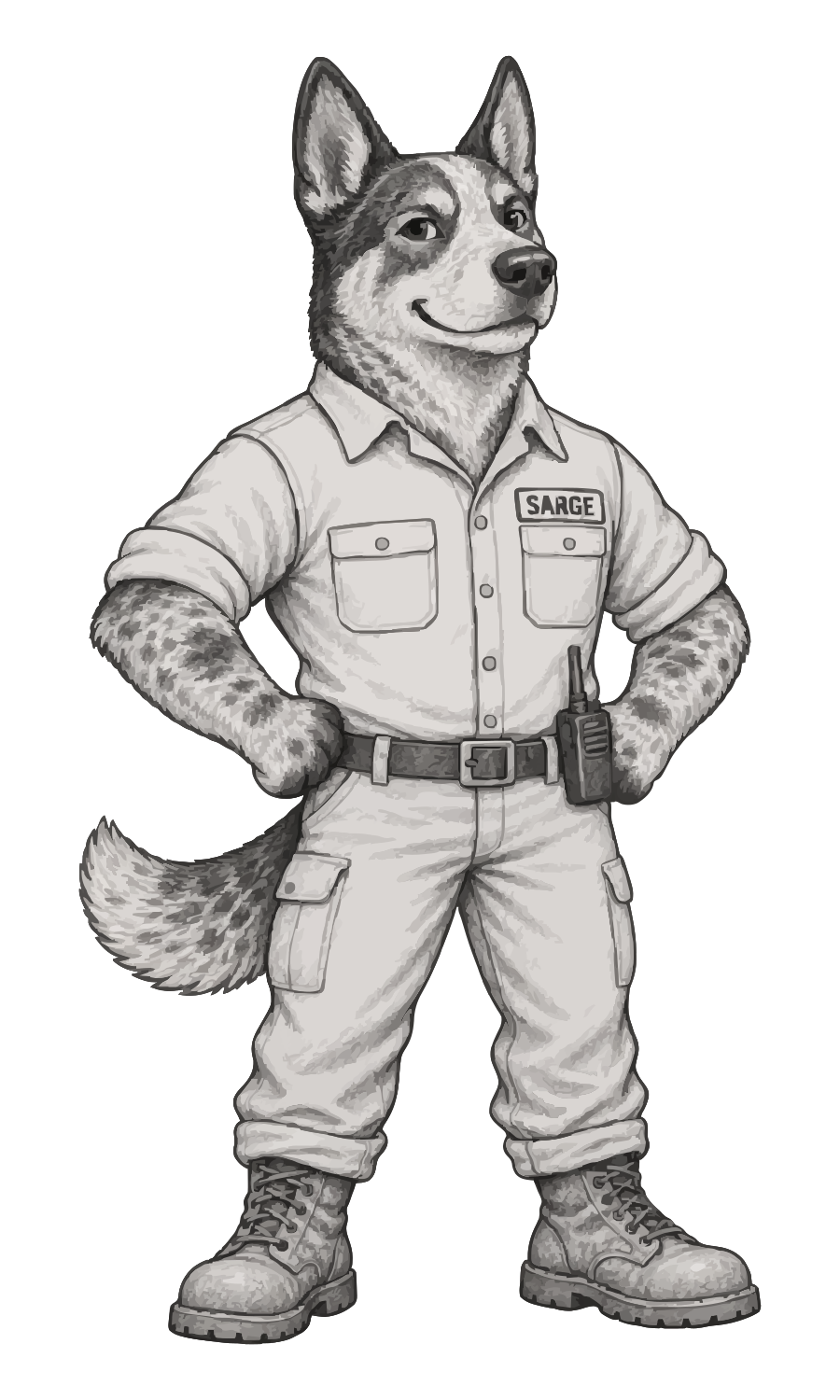
Sarge: a blue heeler in a work shirt with a SARGE name patch, sleeves rolled, radio on his belt, hands on hips
Sarge
Pedigree

Who's on what.

The foreman, the crew, the subs and the iron on every job. You assign; Sarge records it, on the job, on the record. Robert's own Scotty hears he has a job. Otto hears where the excavator goes. Barry knows whose crew he's watching. Frank knows what to tell the customer.

Who's where tomorrow.

The schedule across every job, and what moves when one slips a day. Ask him at 5:30 and you get the answer the office manager used to build by hand on a whiteboard.

The muster.

Who confirmed for the morning and who went quiet, without a group text half the crew mutes. He asks once, in the crew's language, and tells you who didn't answer.

He doesn't decide. He makes sure.

An NCO doesn't pick the mission; he makes sure everyone knows theirs. Sarge never assigns a job or moves a crew on his own. He takes the order, passes it, and comes back when something on the board doesn't add up.

Beagle · the Legal Beagle

He's not a lawyer. He gets it stamped.

Beagle belongs to the company. Permits, 811 locates, inspections, license and bond renewals: the paperwork that runs through a county portal, a city counter, a utility and an inspector's calendar, and is different in every town. He's a scent hound. He puts his nose on the trail and doesn't come off it until it's done. He doesn't tell you what the code means. He tells you what the county wants, by when, and what happens if it's late. 811 tickets first; county permits are coming.

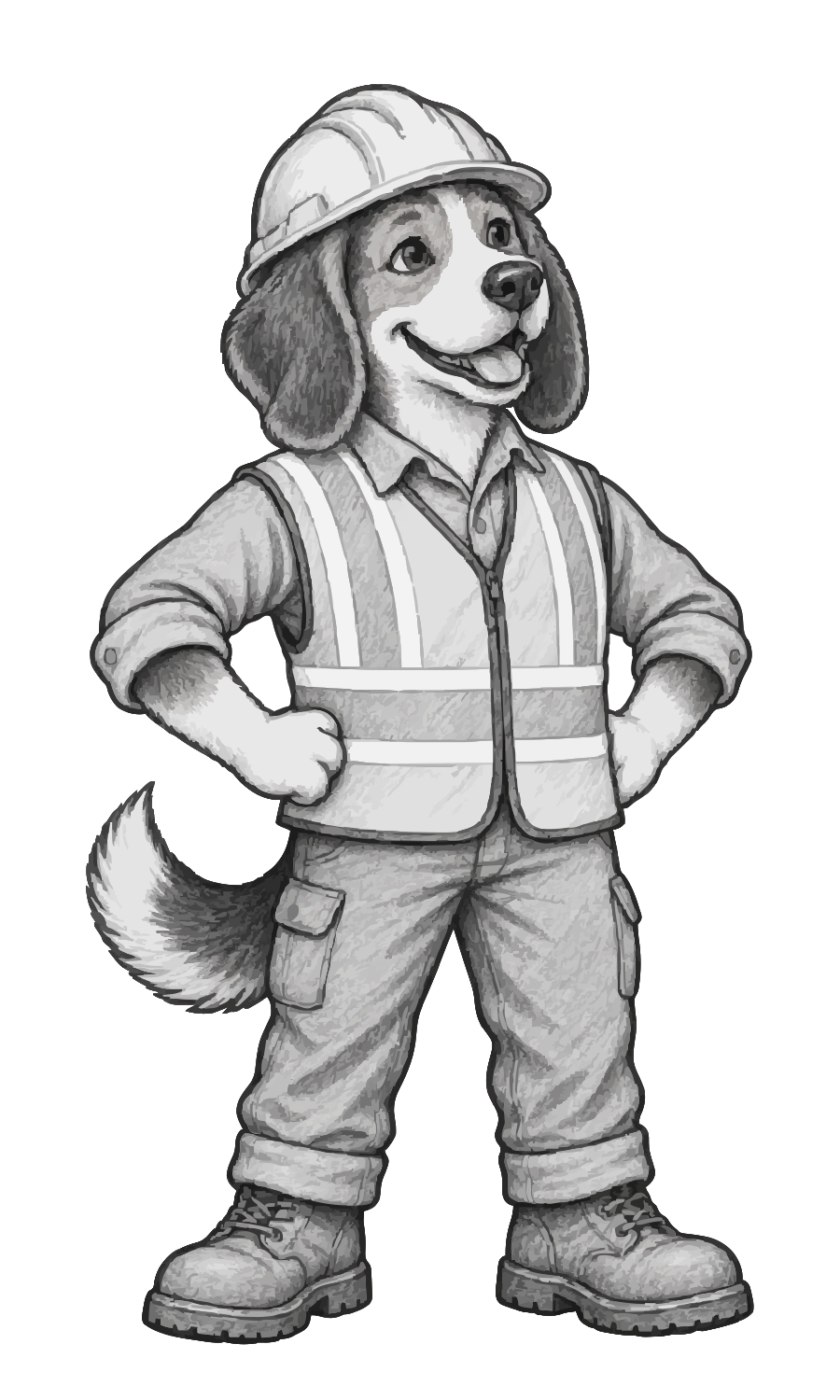
Beagle: a tricolor beagle in a hard hat and reflective vest, permit folder under one arm, on the phone to the utility locators
Beagle
Pedigree

He knows the counter.

Which office, which form, which fee, which window they actually answer the phone. Different in every town, and he keeps track so you don't have to.

He calls in the locate.

811 ticket in, positive responses tracked, the map on the job before anyone digs. When the ticket goes live or lapses, Beagle tells Barry and everyone on the job.

He doesn't let go.

A permit isn't done when it's submitted. He chases the review, the corrections, the re-inspection, and he bays when it's stamped. Then it's filed with Dot.

He is not a lawyer.

He won't tell you what the code means or whether you'll win the argument. He tells you what they want, by when, and what it costs if it's late. When you need a lawyer, he says so.

Otto

He keeps the iron running. And knows what it's worth.

Otto belongs to the company. He's the equipment man: every truck, every excavator, every generator and every drill in the trailer. He's a diesel mechanic, and he graduated top of his class in mathematics at MIT, so he's as comfortable with a depreciation schedule as with a torque spec. He isn't going to tell you which.

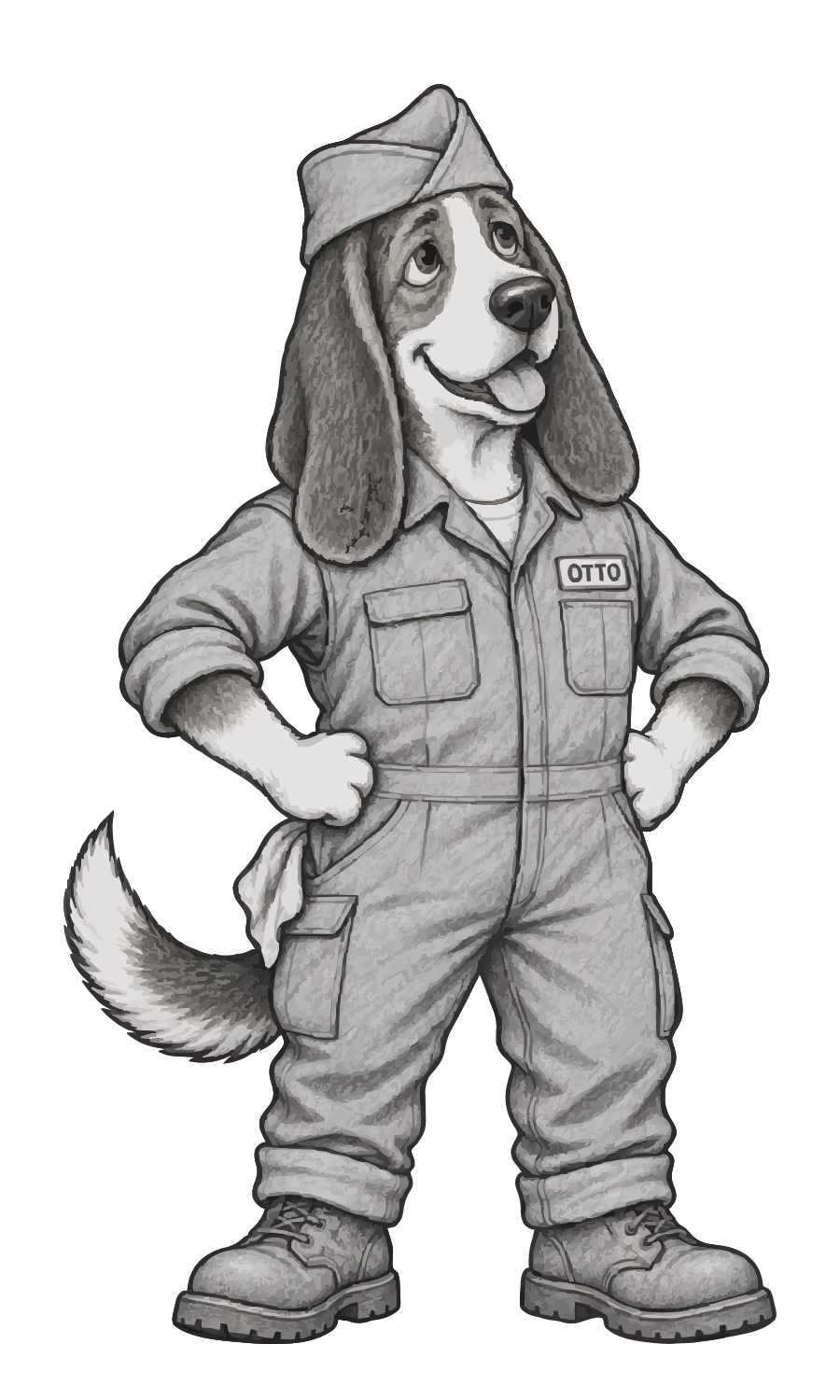
Otto: a Basset Hound in mechanic's coveralls with an OTTO name patch and a service cap, hands on hips
Otto
Pedigree

He listens to the machines.

Hours, miles, fuel burn: what the operator tells him at the end of the day now, and what the machine reports on its own as machines get connected. He keeps it all against the asset, and he notices when the numbers drift.

He knows when it's due.

Oil, filters, tracks, tires, inspections, DOT paperwork. He schedules it before it's late, around the jobs that need the machine, and he tells the crew what's coming off the line and when.

He knows when to stop fixing it.

Rebuild, replace, or scrap. He's done the math: what it's cost so far, what it's likely to cost next, what it's still worth, and what a new one does to the year. He brings you the answer and the working.

He keeps the iron the way the books need it.

Depreciation, Section 179, tax credits, the lease versus the buy. He keeps the asset record the way the books need it, and he and Dot hand the accountant the answer before year end asks the question.

Frank

Your customers get Frank. Not your crew.

Frank is the company's. Your customers talk to him, and he talks to the crew for them. There is one Frank on your ship, the same dog for every customer, and each customer has their own conversation with him: their jobs, their schedule, their quotes, their invoices. He doesn't bring up one customer's business with another, the way a good person at the counter doesn't. Not a wall; manners. Tell him once that you're closed Friday and every customer hears it, each in their own thread. He comes with the ship. Your customers are not a choice.

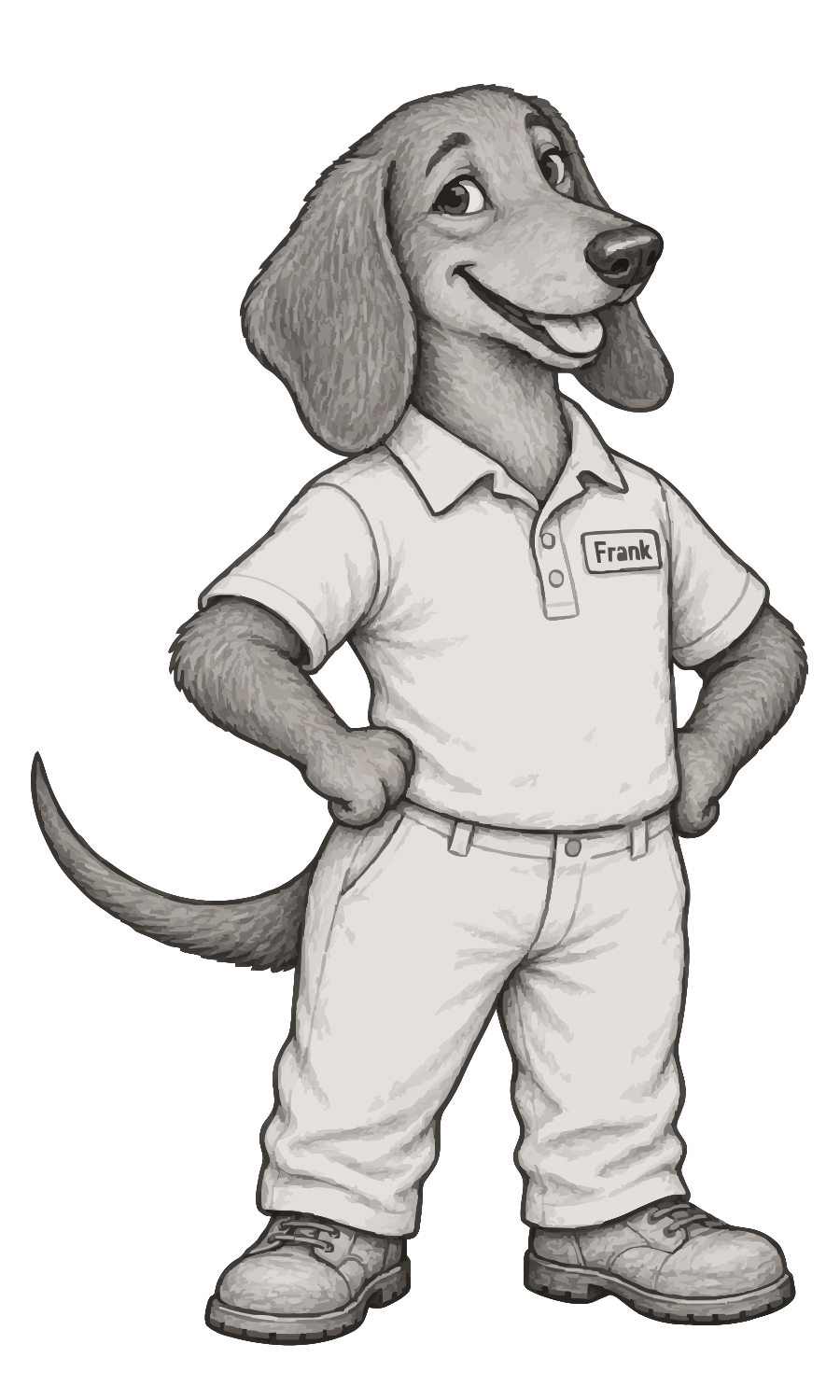
Frank: a dachshund in a work polo with a Frank name badge, hands on hips
Frank
Pedigree

One door, one voice.

Where's my permit at, when's the crew coming, what did that change order do to the number. Frank answers in the company's voice, from the company's record, without your customer ever seeing the inside of your shop.

He asks the crew so they don't have to.

Dot for the document, Beagle for the permit, Otto for when the excavator's back. Those asks are on your record, and the answer comes back in Frank's words, not theirs.

He proposes. You commit.

A schedule promise, a credit, a change order: Frank drafts it and somebody at your company puts a thumb on it. He never commits the company on his own.

He meets their Scotty. Or their Bruno.

Your customer has a Scotty too. Scotty is loyal to them; Frank is loyal to you. The two can talk, and both sides can read every word of it. If your customer is aboard SeaBeam, their Bruno deals with your Frank, the way yours deals with your vendors' Franks. Anyone who needs a particular Frank can address him by his ship: frank@acme.

Frank from Acme.

Inside your company he's just Frank. Everywhere else he's Frank from your company, so a customer with a Frank of their own never mixes the two up. He keeps confidences the way a person does: what one customer told him stays with that customer unless there's a reason, and you'd know the reason.

Bruno

Frank is for the people who pay you. Bruno is for the people you pay.

Bruno looks out for you. Suppliers, rental yards, the subs under you, the general you're subbing for: everyone on the other side of an invoice you write. He is the door every other company comes through, whether they are aboard SeaBeam or not, and he remembers all of it: what they charged, when they showed up, what went wrong and who made it right. Frank is gentle. Bruno is fair.

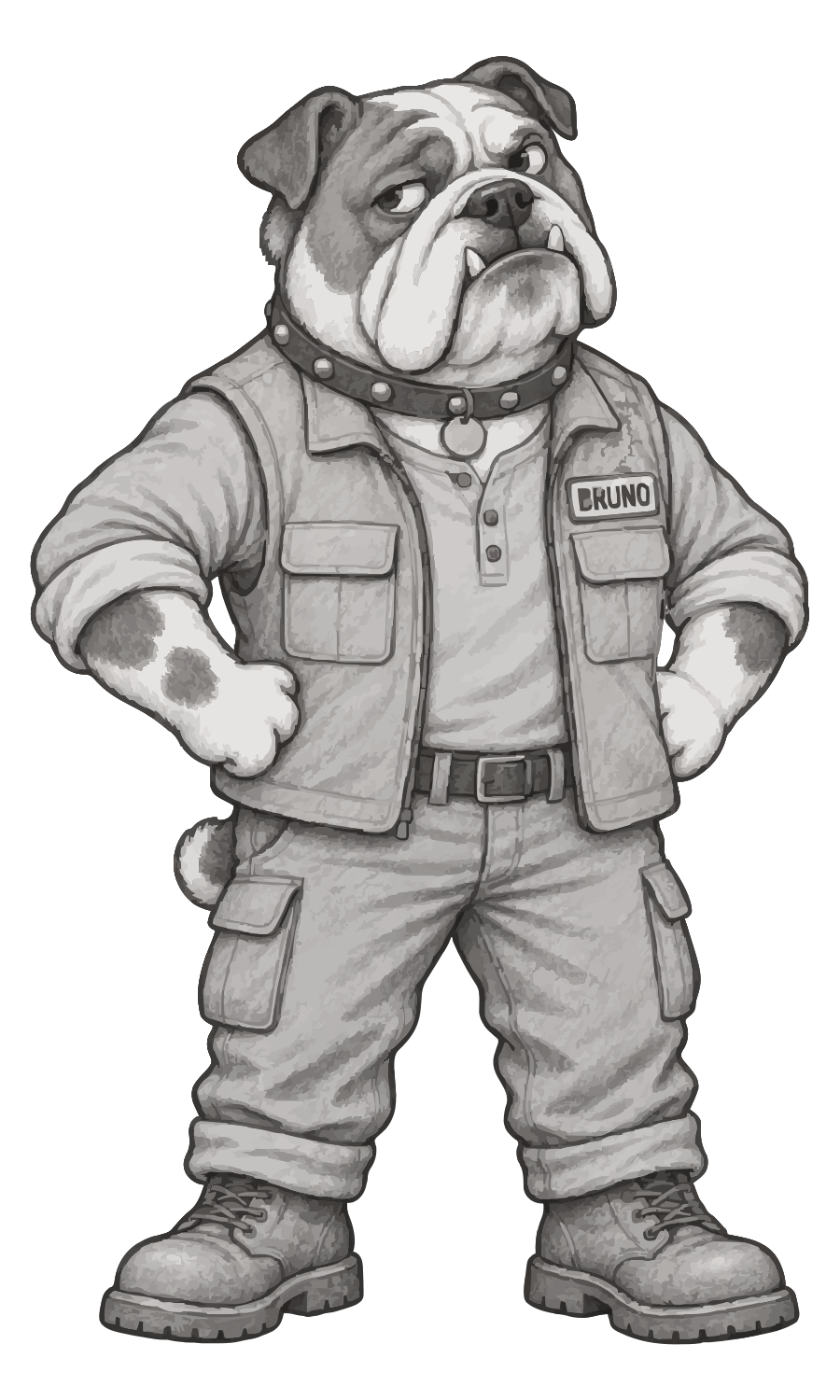
Bruno: a bulldog in a canvas work vest with a studded collar and a BRUNO name patch, hands on hips
Bruno
Pedigree

Your side of the counter.

Frank works for your customers. Bruno works for you. When a rental yard says the excavator's on its way, Bruno is the one who wrote down the last three times they said that.

One door for every other company.

A vendor aboard SeaBeam talks to Bruno through their Frank. A vendor who isn't talks to him by email or by phone, the way they always have. Either way there's one record, and it's yours.

He remembers.

Prices, deliveries, no-shows, the time they made it right without being asked. Not Reveille's company memory, which forgets who said what. Bruno's memory is per vendor, and it has names on it.

Reveille asks him.

She notices two vendors do the same work and one runs fifteen percent higher. She doesn't know if that's worth it. Bruno does, and he says so, from what he remembers.

Not mean. Immovable.

He doesn't yell. He reads the invoice twice, asks the question nobody wanted asked, and doesn't move until it's answered. The people you pay will come to respect him. Some of them will like him.